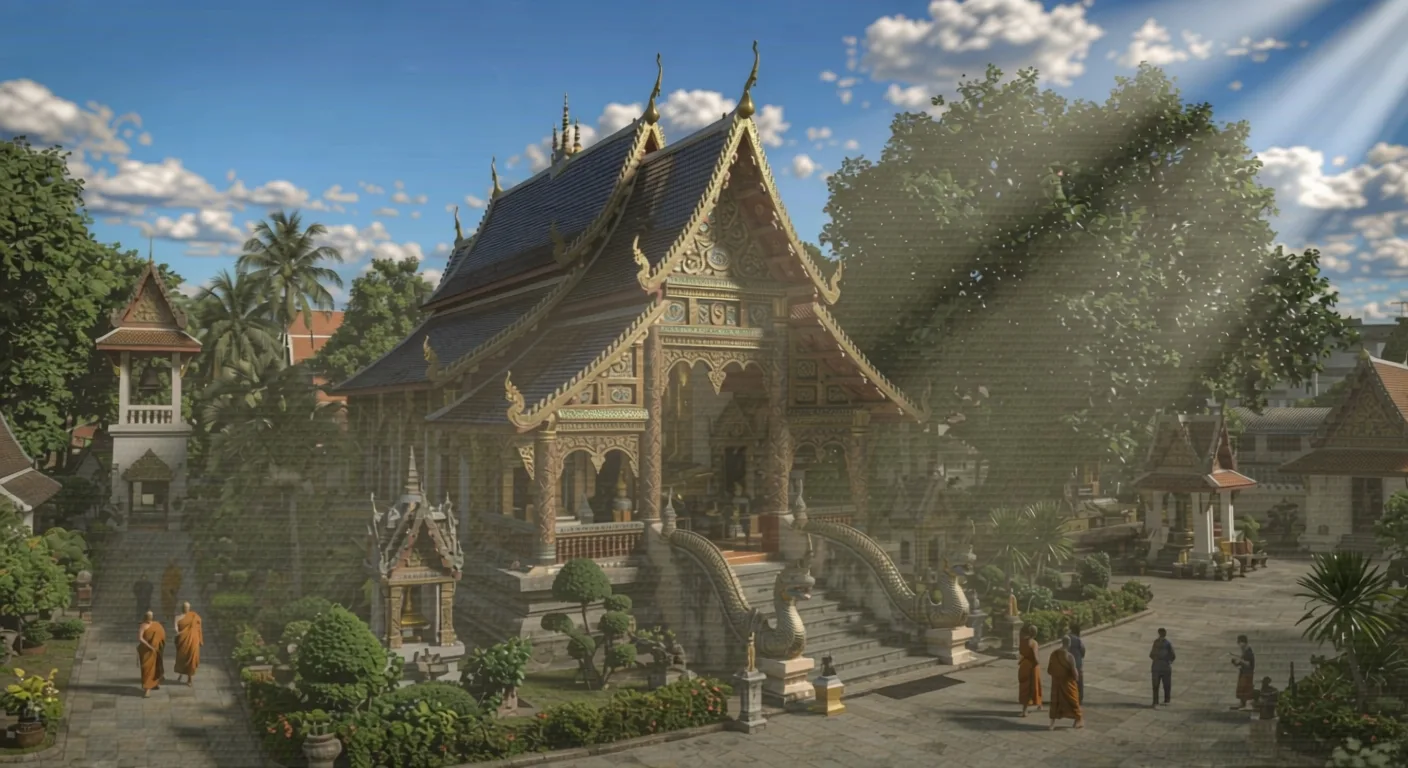
Wat Pradu Chimphli: A Historic Buddhist Temple in Thonburi
Wat Pradu Chimphli (วัดประดู่ฉิมพลี) is a historic Buddhist temple located in Bangkok's Phasi Charoen District, on the Thonburi side of the Chao Phraya River. The temple is particularly respected among devotees and Thai amulet collectors because of its long association with Luang Pu Thuad devotional tradition and its connection with revered Thai Buddhist masters.
The temple is situated within an area historically shaped by canals, waterways and traditional communities. Like many old temples in Thonburi, Wat Pradu Chimphli represents an important connection between Bangkok's religious history and the riverside culture that developed around the Chao Phraya River and its network of canals.
Although the temple is sometimes overshadowed by Bangkok's larger and more famous landmarks, it has a special place in Thai Buddhist devotional culture. Its association with revered monks, sacred objects and meditation traditions makes it particularly interesting to visitors researching Thai Buddhism and Thai amulets.
The History of Wat Pradu Chimphli
Wat Pradu Chimphli is an old Buddhist temple in the historic Thonburi area. Its development is closely connected with the traditional communities that lived along the canals of western Bangkok.
The temple's name, Pradu Chimphli, reflects the traditional naming practices of Thai temples and local communities. Over the years, the temple has remained a place of Buddhist worship, merit-making and community religious activities.
Like many historic Bangkok temples, its importance is not limited to architecture. The temple's true heritage can be found in the generations of monks who lived and practised there, the Buddhist ceremonies conducted within its grounds and the devotional traditions maintained by local communities.
Wat Pradu Chimphli is especially remembered in connection with respected monks and the broader tradition of Thai Buddhist sacred objects.
Wat Pradu Chimphli and Luang Pu Thuad
One of the most important reasons Wat Pradu Chimphli is known among Thai Buddhist devotees is its connection with the devotional tradition surrounding Luang Pu Thuad, one of Thailand's most revered Buddhist monks.
Luang Pu Thuad is traditionally associated with Wat Chang Hai in Pattani Province and is one of the most widely respected figures in southern Thai Buddhist culture.
His reputation became particularly strong through stories of compassion, spiritual power and miraculous events preserved in Thai Buddhist oral tradition.
Images and amulets bearing Luang Pu Thuad's image are consequently among the most recognisable categories of Thai Buddhist devotional objects.
Wat Pradu Chimphli is connected with this wider devotional tradition and has become a significant name for devotees and collectors interested in Luang Pu Thuad sacred objects.
Luang Pu Thuad in Thai Buddhist Tradition
Luang Pu Thuad, also known as Luang Pu Thuat or Luang Phor Thuad, is traditionally believed to have lived several centuries ago in southern Thailand.
His traditional biography describes him as an exceptionally virtuous monk who demonstrated profound Buddhist knowledge and spiritual accomplishment.
One of the best-known stories concerns an incident in which he is traditionally said to have transformed seawater into fresh water during a journey. This story became one of the most famous elements of his devotional tradition.
Such accounts are part of Thai Buddhist religious tradition and should be understood as expressions of faith and devotion rather than scientifically verified historical events.
Luang Pu Thuad's reputation nevertheless remains extraordinarily strong, and his image continues to appear on amulets, Buddha images, medallions and other devotional objects throughout Thailand.
Why Luang Pu Thuad Is So Revered
Luang Pu Thuad is traditionally respected for qualities including compassion, wisdom, spiritual strength and protection.
Many Thai devotees keep an image or amulet of Luang Pu Thuad as a reminder of Buddhist virtues and as an object of religious devotion.
Traditional beliefs may associate his sacred images with protection from danger, safe journeys, good fortune and spiritual reassurance.
These associations belong to Thai Buddhist devotional culture and should not be represented as scientifically proven supernatural effects.
Wat Pradu Chimphli and Thai Amulet Culture
Wat Pradu Chimphli has an important place in the study of Thai Buddhist amulets, particularly among collectors interested in sacred objects connected with revered monks.
Objects associated with the temple may include medallions, Buddha images, votive tablets and other devotional pieces.
For collectors, the temple's name is particularly important because different periods and editions may have been produced under different circumstances.
A responsible identification should therefore consider the exact monk, temple, year, material, mould, inscription, dimensions and provenance rather than relying solely on the appearance of an amulet.
Luang Pu Thuad Amulets and Devotional Objects
Luang Pu Thuad amulets are among the most popular categories of Thai Buddhist sacred objects.
Collectors encounter many different versions produced by temples throughout Thailand. Some are associated with Wat Chang Hai, while others have been issued by temples and organisations that honour Luang Pu Thuad's legacy.
For this reason, the phrase “Luang Pu Thuad amulet” does not automatically identify a single temple or historical edition.
When documenting an amulet in a professional collection database, it is useful to record the temple, monk or sponsoring authority, production year, material, amulet type, edition, inscription and documented provenance.
This approach allows collectors to distinguish historically important editions from later commemorative pieces.
Traditional Beliefs Associated with Luang Pu Thuad Amulets
Devotees traditionally associate Luang Pu Thuad amulets with protection, safe travel, overcoming difficulties and spiritual confidence.
Some devotees also regard his image as especially appropriate for travellers and people who wish to carry a reminder of Buddhist compassion and spiritual resilience.
These beliefs are part of Thailand's religious and cultural heritage and should be understood as matters of faith rather than scientifically established claims.
Wat Pradu Chimphli and the Thonburi Temple Tradition
Wat Pradu Chimphli belongs to the wider group of historic temples that developed throughout Thonburi.
Before the modern expansion of Bangkok's road network, waterways were the principal means of transportation through the region. Temples were frequently established near canals and rivers because these locations allowed monks and local communities to travel easily.
Thonburi consequently developed a distinctive Buddhist landscape characterised by old temples, canals, traditional houses and communities connected to the Chao Phraya River.
Wat Pradu Chimphli forms part of this historical environment and provides an opportunity to explore a less commercialised side of Bangkok's Buddhist heritage.
The Buddhist Role of the Temple
At its heart, Wat Pradu Chimphli remains a Buddhist temple rather than simply a historical attraction.
Thai temples traditionally serve multiple functions, including religious worship, merit-making, Buddhist ceremonies, meditation, education and community gatherings.
The temple provides a place where local devotees can make offerings, participate in religious ceremonies and maintain connections with the Buddhist community.
This continuing religious role is important because it demonstrates that Thailand's historic temples are not merely preserved monuments. They remain living institutions within Thai society.
Monastic Practice and Meditation
The Thai Buddhist temple tradition places strong emphasis on sīla, samādhi and paññā—ethical conduct, concentration and wisdom.
Monks residing in temples such as Wat Pradu Chimphli follow the Vinaya, the traditional discipline governing monastic life, while engaging in Buddhist study, chanting, meditation and teaching.
For lay devotees, visiting the temple can provide an opportunity to make merit, listen to Dhamma teachings and cultivate mindfulness.
The quiet atmosphere of historic temple compounds can also encourage reflection away from the busy environment of modern Bangkok.
Thai Buddhist Architecture
Wat Pradu Chimphli reflects the architectural traditions of Thai Buddhist temple design.
Important elements commonly found within Thai temple complexes include the ubosot, viharn, chedi, Buddha images and monastic residences.
Each structure has a different religious function and contributes to the overall sacred landscape of the temple.
The ubosot, or ordination hall, is especially important because it serves as the principal location for formal monastic ceremonies.
Visitors should appreciate that temple architecture is not simply decorative. The arrangement of buildings, Buddha images and sacred spaces reflects Buddhist beliefs and the organisation of monastic life.
Wat Pradu Chimphli and Thai Buddhist Devotion
Thai Buddhist devotion often combines formal religious practice with personal expressions of faith.
Devotees may make offerings, light incense, chant prayers, meditate or pay respects to revered monks and Buddha images.
Sacred objects such as amulets and medallions can also form part of this devotional culture.
For many devotees, carrying an amulet is not simply about seeking supernatural protection. It can also serve as a personal reminder to live according to Buddhist values and to remember the teachings represented by a respected monk.
Wat Pradu Chimphli and the Study of Thai Amulets
For collectors, Wat Pradu Chimphli is particularly interesting because temple history, monk lineage and sacred-object traditions intersect here.
A professional study of Thai amulets should always separate historical evidence, temple tradition, collector attribution and devotional belief.
Where an amulet is attributed to a particular monk or temple, documentation should ideally include its historical period and the circumstances under which it was produced.
Later commemorative editions may have considerable cultural and devotional value even when they are not antiques or objects personally consecrated by the original master.
This distinction is particularly important when documenting Luang Pu Thuad amulets because his image has been used by many temples over several generations.
Wat Pradu Chimphli as a Place of Pilgrimage
Devotees visit Wat Pradu Chimphli to make merit, pay respects and participate in Buddhist activities.
For people interested in Thai sacred objects, the temple also provides a connection to the wider devotional traditions surrounding revered monks such as Luang Pu Thuad.
The temple can therefore be approached from several perspectives: as a place of worship, a historic Bangkok temple, a centre of community Buddhism and a location associated with Thai amulet culture.
Visiting Wat Pradu Chimphli
Wat Pradu Chimphli is located in Phasi Charoen District, Bangkok, within the historic Thonburi area.
Visitors should remember that the temple is an active religious site. Modest clothing and respectful behaviour are appropriate when visiting.
When entering the ubosot or other sacred buildings, visitors should follow temple instructions regarding footwear, photography and appropriate conduct.
Visitors should also avoid disturbing monks or worshippers who are engaged in meditation, prayer or religious ceremonies.
Wat Pradu Chimphli and Bangkok's Religious Heritage
Wat Pradu Chimphli contributes to the rich religious heritage of western Bangkok.
The temple is part of a network of historic Buddhist sites that developed around Thonburi's waterways and traditional communities.
Its connection with Luang Pu Thuad devotional culture also demonstrates how the reputations of revered monks can extend far beyond the geographical location where they originally lived and taught.
Through its Buddhist activities and association with sacred objects, Wat Pradu Chimphli continues to contribute to Thailand's living religious heritage.
Why Wat Pradu Chimphli Matters
Wat Pradu Chimphli is significant because it represents the continuing relationship between Thai Buddhism, monastic tradition, sacred objects and community heritage.
Its historic location in Thonburi connects the temple with the waterways and communities that shaped western Bangkok.
Its association with the devotional tradition of Luang Pu Thuad makes it particularly meaningful to devotees and Thai amulet collectors.
For students of Thai Buddhism, the temple provides an opportunity to explore the relationship between revered monks, sacred objects and popular religious devotion.
For visitors interested in Bangkok's history, it provides a chance to discover a quieter and more traditional aspect of the city's Buddhist landscape.
Conclusion
Wat Pradu Chimphli is a historic Buddhist temple in Bangkok's Phasi Charoen District and an important part of the religious heritage of Thonburi.
The temple's significance comes from its continuing role as a place of Buddhist worship and community life, together with its association with the devotional traditions surrounding revered Thai Buddhist masters.
Its connection with Luang Pu Thuad gives the temple particular importance for devotees and collectors interested in Thai Buddhist sacred objects.
Luang Pu Thuad remains one of Thailand's most revered Buddhist figures, and his image continues to appear on countless amulets and devotional objects. However, collectors should carefully distinguish between objects produced at different temples and during different periods.
For those interested in Thai Buddhism, Wat Pradu Chimphli offers more than an opportunity to view sacred objects. It provides a connection to the living traditions of merit-making, Buddhist practice, monastic discipline, meditation and devotional remembrance.
Above all, Wat Pradu Chimphli remains a valuable part of Bangkok's Buddhist heritage and a meaningful destination for anyone seeking to understand the relationship between Thailand's historic temples, revered monks and enduring Buddhist culture.